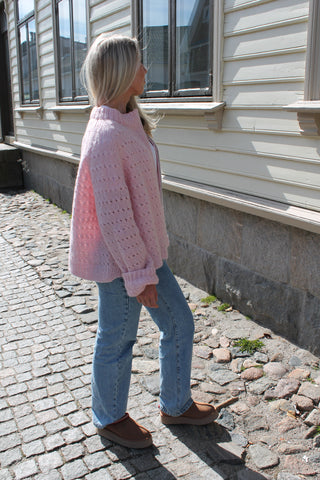
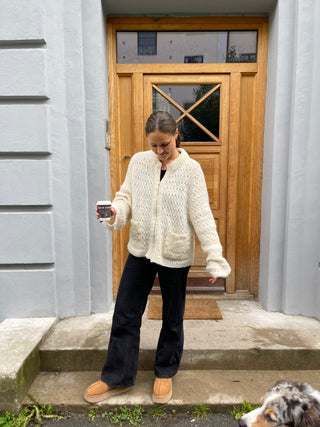
Think Green! They Say, What is Green? We Wonder
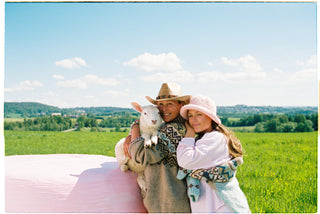
By Marthe & Dorthe Skappel
Making conscious and sustainable choices is not always easy. We are bombarded with tips and information on how to think green, and how to embrace products and services that have a smaller negative impact on the climate and the environment. For most of us, this can feel overwhelming, and in the bigger picture, our personal contributions may seem insignificant.
When we took part in Ulldagen in 2021 (a conference dedicated to Norwegian wool), we became aware of the importance of Norwegian wool and the sheep farming industry in Norway. A treasure that had been right in front of us all along. A wool quality with truly remarkable properties, produced by an industry that brings with it so much good, and which, for many reasons, is incredibly important to preserve.
We want to highlight the benefits of the sheep farming industry and Norwegian wool—benefits that we believe are often overlooked or forgotten in discussions about the green transition.
It concerns the climate
the green transition
The world is in the midst of a climate crisis, and Norway has committed to becoming a low-emission country by 2050. To achieve this, we must transition to a society where growth and development occur within the limits of what nature can sustain.
We agree that it is right and important to focus on cultivating and eating more plant-based foods in the future, but not at the expense of the sheep farming industry, which is often labeled as an environmental culprit.
Why is the sheep farming industry important
NORWEGIAN FOOD FROM NORWEGIAN RESOURCES
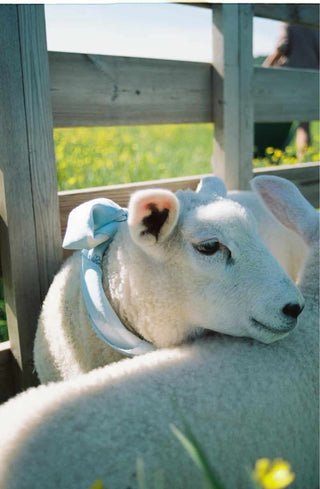
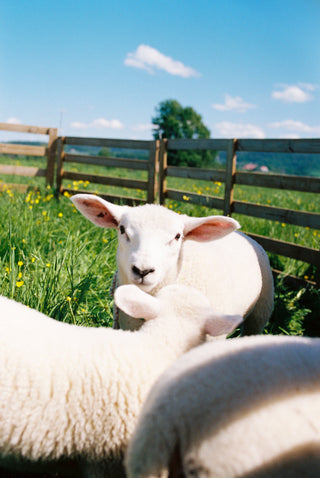
Sheep are a Norwegian raw material produced using local resources. Every summer, 2.1 million sheep and lambs are released onto outfield pastures, where they spend large parts of their lives.
Most of what sheep eat is grass and other roughage. In this way, sheep are able to utilize resources that cannot be used directly as human food and transform them into high-quality products such as meat and wool of the finest quality.
Preserving Norwegian Nature and Cultural Landscapes
The UN’s Intergovernmental Panel on Climate Change emphasizes that it is necessary to use local resources for food production, and that production must be adapted to the natural conditions. This is also a Norwegian political objective. Norway has only 3% cultivated land and other agricultural areas. The remaining 97% consists of outfield land, and nearly half is ideally suited for livestock grazing.
Loss of nature is one of the major environmental challenges of our time. More than 13,000 Norwegian farms have sheep, making sheep important for vibrant rural communities and a cultural landscape. Sheep help keep vegetation under control, which is crucial for maintaining biodiversity. Without animals grazing on outfield land, Norway would gradually become overgrown.
CARBON STORAGE
We are aware that ruminants, such as sheep and cows, are a significant source of greenhouse gas emissions. Research, however, suggests that well-managed grazing systems can capture substantial amounts of carbon dioxide (CO₂) from the atmosphere.
At present, the effect of carbon sequestration in pastures is not included when discussing the climate impact of ruminants, and the overall climate effect of this is still under investigation.
An important factor that is not included in the climate accounting when discussing the sheep industry is wool production.
Norwegian wool is gold
The sheep industry’s main source of income is meat sales, but wool sales are also essential for the economy. Every year, 4,000 tons of wool are produced in Norway. Wool is a complex fiber, and some call it nature’s “high-tech” material. It protects sheep and lambs from the changing weather conditions they live under, from sun and heat to cold and snow. Wool is a sustainable resource that has always been of use and enjoyment to humans.
NORWEGIAN WOOL AND ITS PROPERTIES
1 Sustainable
It is renowned for its resilience, durability, and luster, making it ideal for sustainable, long-lasting textiles.
2 Thermoregulating
It naturally regulates temperature, keeping you warm in winter and cool in summer.
3 Naturally Water Resistant
Naturally water-repellent, wool has a protective fiber layer that resists liquids and dirt, making it easy to keep clean and reducing the need for frequent washing.
4 Long-lasting
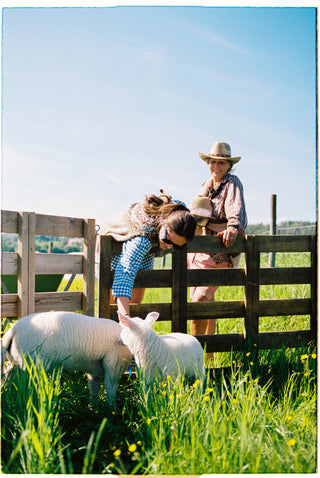
It is well-suited to Norway’s weather, making garments made from Norwegian wool highly durable, resistant to wear, and long-lasting.
5 Biodegradable and Renewable
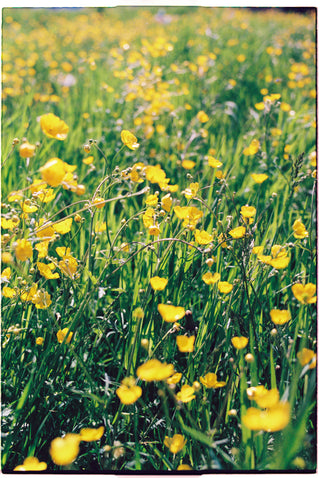
It is a biodegradable and renewable resource, helping to minimize environmental impact.
6 Eco-labeled and Ethically Sourced
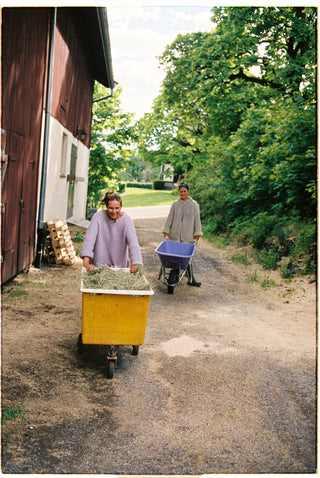
Norwegian wool is Swan-labeled and ethically sourced from healthy, well-cared-for animals.
What does this have to do with our knitting business?
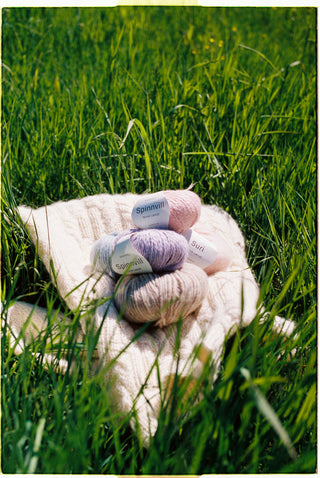
Like the sheep industry, knitting has a long tradition in Norway.
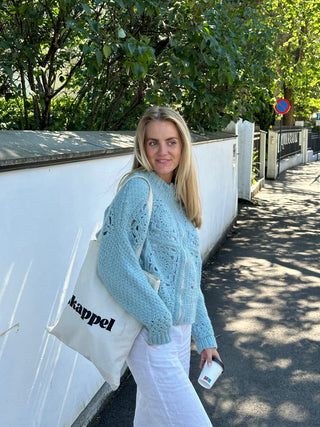
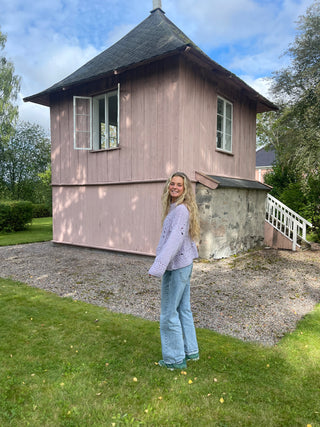
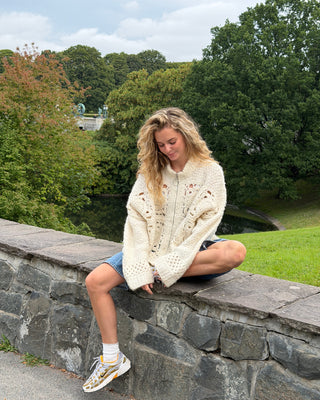
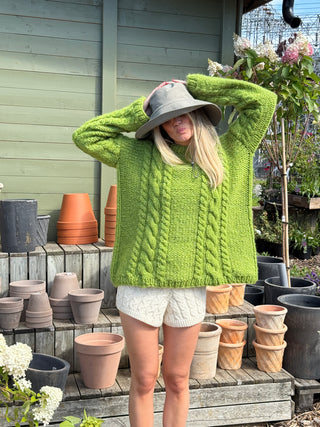
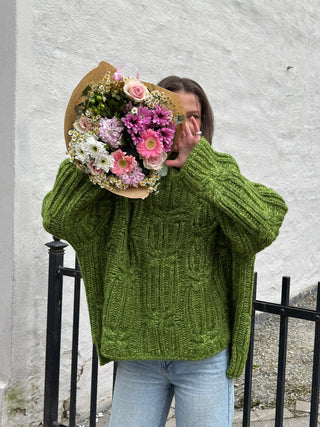
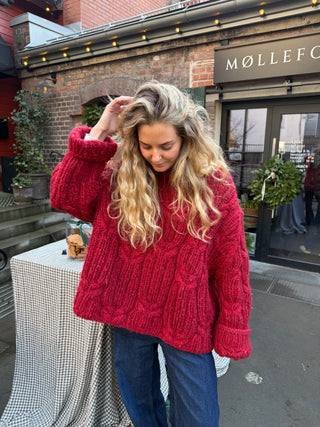
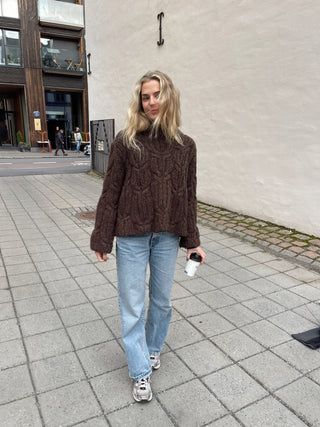
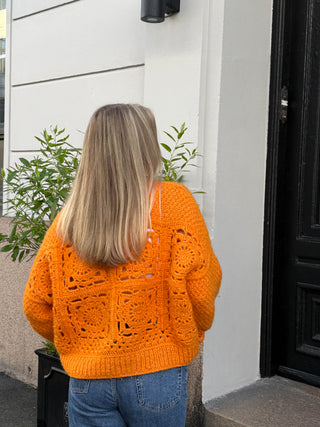
Knitting is an example of slow fashion, where we are encouraged to create sustainable garments for long-term use. In our busy everyday lives, traditional crafts like knitting and crocheting have also become an important source of relaxation and joy for many. Over 40% of all women in Norway knit.
In order for people to be able to knit sustainable garments of good quality, we want to continue prioritizing products made from the world’s finest raw material – Norwegian wool! If the sheep industry disappears, the important work done by grazing animals in outfield pastures will be lost, and access to Norwegian wool could, in the worst case, disappear.
For us, it feels wrong to label the sheep industry as an environmental culprit, because sheep emit methane while producing locally sourced protein and sustainable wool, all the while helping to maintain the cultural landscape.
THINK GREEN
THEY SAY
DO THE BEST YOU CAN
WE SAY
HOW CAN WE SUPPORT THE SHEEP FARMING INDUSTRY?
1 Choose Norwegian Wool
Choosing Norwegian wool helps support the livelihoods of sheep farmers. The quality of Norwegian sheep’s wool is the very best suited to our harsh climate.
2 Be Mindful When you shop
Ask questions about where the wool is sourced from, and choose Norwegian wool when you can—both when it comes to yarn, as well as textiles for clothing and interiors. This supports local sheep farmers and encourages sustainable consumption. And best of all, you are investing in lasting quality.
3 Eat sheep and lamb with a clear conscience
Norwegian lamb is a world-class raw material. Explore new recipes using lamb and mutton. This can help increase demand throughout the year and support sustainable production.

SOURCES
Marion Tviland, Director Wool in Norilia
Finn Avdem, Subject manager for small cattle in Nortura
Nyt Norge, «Sau er matnyttig», 06.02.2023
Matprat.no, "Norsk lam i verdensklasse"